Zach and the other bystanders fail to stop Marcus
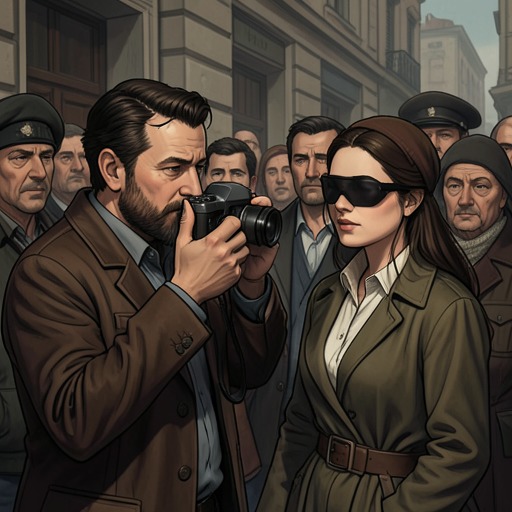
Thirteen Reasons WhyThe failure of Zach Dempsey and the other bystanders to stop Marcus Cooley at Rosie’s Diner is a consequential part of Hannah Baker’s account of the encounter: as Marcus touches her, she tries to free herself and looks around for help, but the people who notice turn away. Zach later says he tried to rescue her, a fact Hannah acknowledges without accepting it as an answer to why he is on her tape. The scene distinguishes an attempt to help from effective intervention, and shows how silence leaves the person being touched to bear the immediate danger alone.
The Encounter and Its Visible Signals
Marcus’s arm moves behind Hannah’s back and pulls her close; his other hand touches her upper thigh. Beneath the table, Hannah’s fingers try to pry his grip loose and push him away. She does not want to yell, she explains, because the situation has not yet reached that level. Instead, she looks over the booth toward the other booths and the counter, trying to catch someone’s eye. The scene gives her distress a physical form: resistance below the table and a wordless appeal above it.
The people nearby provide a response, but not assistance. A few glance over, then turn away; Hannah observes that no one asks whether there is a problem. Their brief attention matters because it establishes that the moment is not wholly unseen. Yet the narrative does not claim that every person understands exactly what is happening. What it does establish is that visible discomfort and attempted resistance receive no follow-up, leaving Hannah without the check-in or interruption she is seeking.
Zach’s Presence and the Limits of Rescue
Hannah singles Zach out from the surrounding customers. She asks whether he was simply being polite, pressing him on the difference between noticing and acting. Her question makes politeness an inadequate explanation for looking away from a possible need for help. In her account, the issue is not whether Zach could read her mind, but whether he responded to the signs she was giving: her struggle to remove Marcus’s hand and her effort to meet someone’s eyes.
Later, Hannah explicitly recognizes that Zach tried to come to her rescue. She immediately adds that this is not why he is on the tape. That qualification prevents the episode from becoming a simple story of total indifference: an attempt was made, but it did not stop the encounter, and it does not erase the other circumstances she is confronting Zach about. The distinction is central to the action’s meaning. Good intention and successful intervention are not the same, and an attempted rescue does not automatically settle what responsibility remains afterward.
Consequences and the Tape’s Accusation
In the immediate aftermath, Clay Jensen describes clenching his hands into fists and wanting to strike Marcus, though he has never hit anyone before. His reaction conveys anger at what Hannah has recounted, but it does not change what happened in the diner: at the moment she was trying to push Marcus away, she received no effective help from the people around her. The contrast between Clay’s later violent impulse and the earlier bystanders’ inaction emphasizes how strongly the story separates feeling from action. Anger after the fact is not the intervention Hannah needed then.
Hannah’s questions to Zach also connect this episode to a later consequence in her life. She tells him that at the table the worst thoughts first came into her mind, and that she first began to consider suicide, though she cannot bring herself to say the word aloud. She does not present the diner encounter as a complete explanation of her eventual death; she locates the beginning of those thoughts amid a wider accumulation of experiences. The tape instead records how an episode of unwanted touching, a visible but unanswered plea, and the failure of a would-be rescuer to make a difference become part of that accumulation.
The scene’s force lies in its small, recognizable gestures: fingers prying at a grip, eyes searching the room, people glancing away. It does not make the bystanders’ motives certain; Hannah herself wonders whether they were being polite. But uncertainty about motive does not alter the outcome. Nobody asks whether she needs help, and she is left struggling alone. By returning to that gap between seeing and responding, Hannah’s account treats intervention not as abstract heroism but as a concrete act that could have interrupted an unwanted encounter.